


By Kent Gray
“There will be nobody like Bruce Anstey, but is he a Bruce Anstey 2.0?”
Chris Pritchard had just put his TT Daily Podcast co-host, Lee Johnston, on the spot. The forthright and funny Northern Irishman, a five-time Northwest 200 champion and winner of the 2019 Supersport TT, was ready. He knows Anstey. Raced against the “Flying Kiwi”.
Which meant he also knew the gravity of the comparison.
“Honestly, I didn’t think I would ever say them words, but I’m…I’m saying he’s got the vibe. I think the Bruce Anstey I’ve seen, [Rees is close] to Bruce Anstey.”
Out loud. On the record. The humble 33-year-old from Whakatāne in his second Isle of Man TT framed in the same conversation as a guy that gave John McGuinness the shudders in his pomp. Both rider’s pomp.
Bruce Anstey. Twelve TT wins. One time Mountain Course lap record holder. A bushy-bearded man so fast, so smooth, so utterly unreadable under pressure that the paddock ran out of adjectives and just started calling him “Bruce Almighty”.
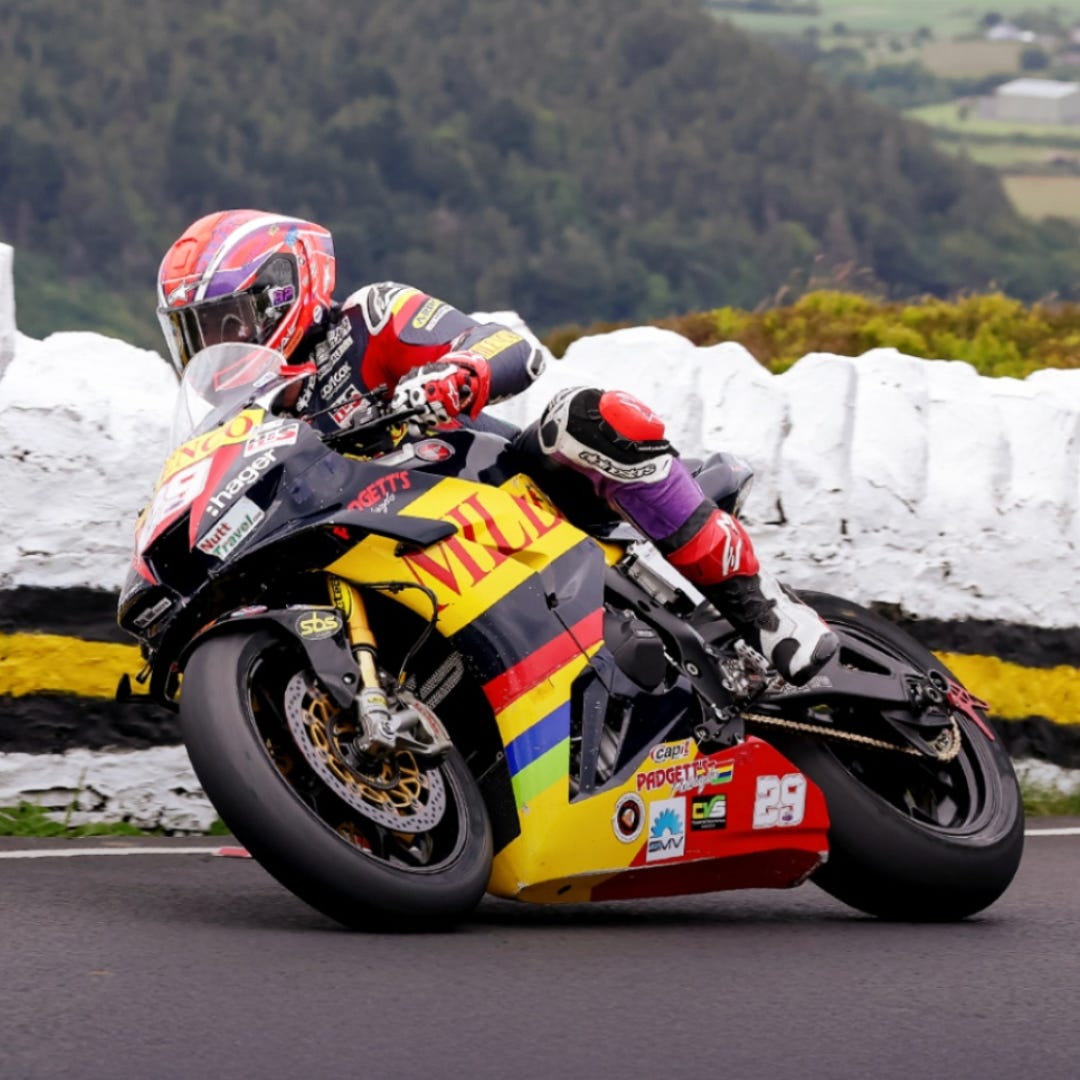
And then Mitch Rees turned up in the Milenco by Padgett’s garage, a team previously home to the likes of Steve Hislop, McGuinness, Davey Todd, Conor Cummins, Ian Hutchinson and Anstey himself. Johnston had comparisons at hand.
“He’s beaten everybody that’s winning TTs. On other tracks in New Zealand. So that’s just a…it’s just a time period thing more than the fact of if the ability is there.”
Not if. When.
The most horizontal man in the most horizontal team
There is a moment in the podcast, recorded during race week, where Pritchard asks Mitch Rees what he would like to have achieved by the end of TT 2026.
Rees doesn’t pause.
“Obviously, I’ve already achieved it, to be fair. I went faster than I did last year. Job done.”
This is not false modesty. This is not a rider managing expectations. This is exactly how Mitch Rees is wired, and it is — according to everyone who has watched him operate up close — precisely why he is going to win at this place.
Johnston had already diagnosed a key ingredient before the races began.
“I can guarantee you he’s not wasted any energy today, not one drop. He might actually be sleeping right now as we’re doing this interview and getting recharged.”
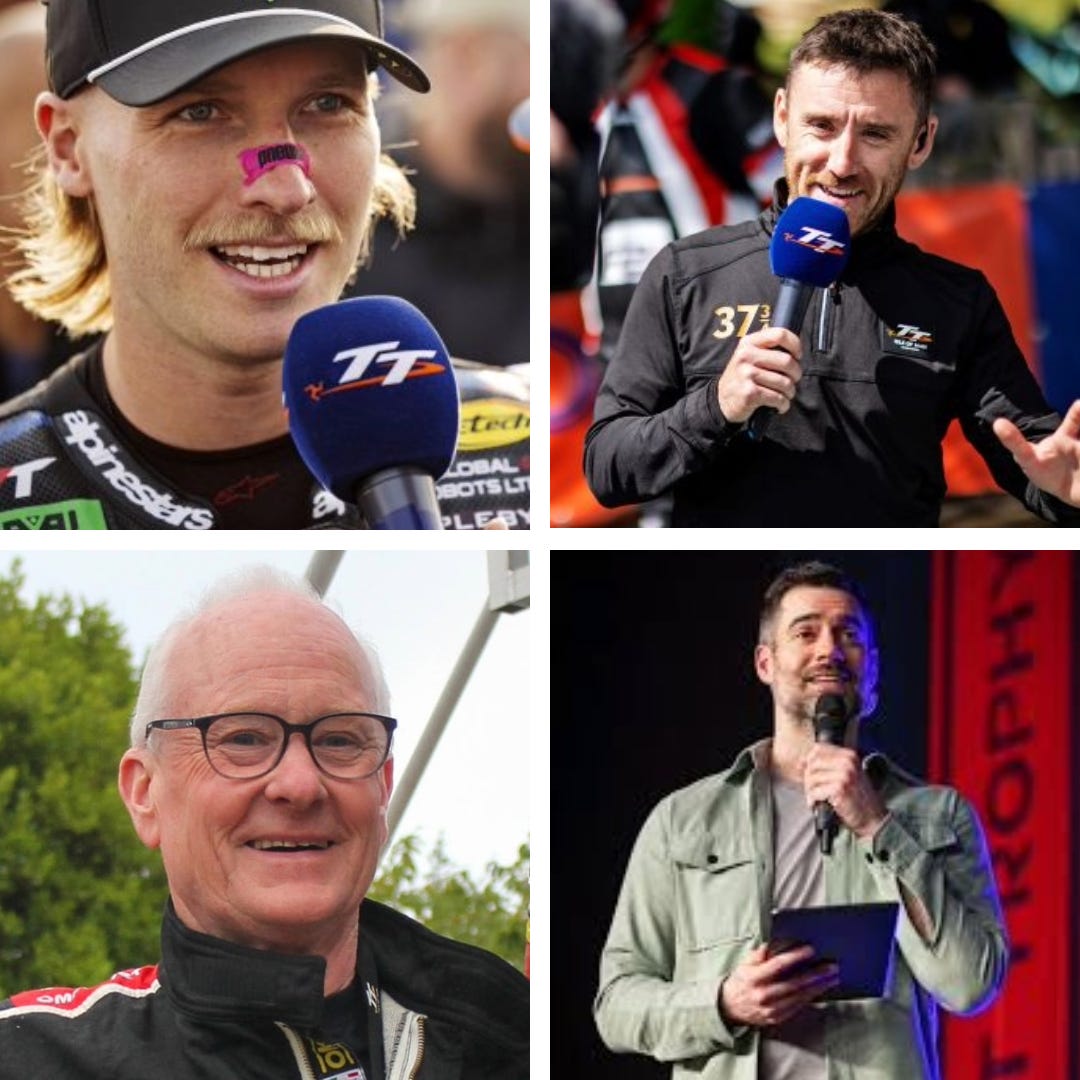
Clive Padgett, who has welcomed Hutchy, McGuinness, Todd and “my hero” Anstey through his doors, put it simply: “The lads put enough pressure on themselves without any pressure from a team.”
And then Johnston hit with a comparison that cannot be ignored.
Bruce Anstey. Mitch Rees. Horizontal Kiwis. Men both seemingly utterly unbothered by what should, by any rational measure, be the most terrifying fortnight in motorsport.
“There’s so much of Mitch you can see in him as well,” Johnston said. “It’s hilarious, the fact that nothing seems to faze them.”
How a Whakatāne kid ends up in the Padgett’s garage
The thread that leads Mitch Rees to the Isle of Man starts in New Zealand, in the paddocks he grew up in, watching his father Tony race and win and build a reputation that travelled globally.
Tony Rees is a three-time NZSBK champion. A Cemetery Circuit legend. His sons, Mitch and the late Damon, absorbed all of it without, apparently, ever letting it turn into pressure.
“Dad’s watched it [the TT] and obviously he’s a great road racer and had the opportunity to come over and do it,” Mitch said. “You sort of see it and hear it all the time. It’s not in your face as much as it probably is in the UK, but you know, it’s one of those things… ‘that’s pretty cool, pretty mental, it’d be cool to do it.’ But I never thought I’d be here.”
The mechanism that got him here was three-time TT winner Davey Todd, the young Englishman as at ease behind a microphone during TT fortnight as an expert analyst as he was frustrated watching from the sidelines, injury having cruelly ruled him out of racing.
Todd came to New Zealand, raced at the Cemetery Circuit and the earlier Suzuki International Series rounds, and encountered Mitch Rees the way everyone encounters Mitch Rees. Almost confused by how fast someone so calm can actually be. He dialled Clive Padgett’s number before leaving the land of the Long White Cloud and unheralded, unflappable street racers.
“Davey rang me from New Zealand back end of ‘24. Davey’s out there stopping with Mitch and the family and Tony and Vicki and so on, and, oh, ‘you’ve got to get this guy over, you know, come on, we’ve got to get him on a bike at the TT’.
“And, you know, me being me, I said, well, better get Mitch to give me a shout because I’m very soft at going forward and asking guys to ride our motorbikes. It’s got to be their decision and wholly their decision to go down Bray Hill. It’s, we love the place, but we do know its inherent danger and Mitch sent me a lovely text and here we are now.”
Rees had earned that phone call the hard way. In the New Zealand summer of 2024-25, he had gone out and done something quietly extraordinary. He had raced Todd and Peter Hickman — two of the fastest road racers on the planet — and handed them all a lesson.
“I’d kind of smoked Davey, smoked Pete,” Rees said, with the same matter-of-fact delivery he applies to everything. “So I was stoked with that in New Zealand. And I was like, I really wanted to do something different and just go and see what I could actually do out there in the world, sort of deal, you know?”
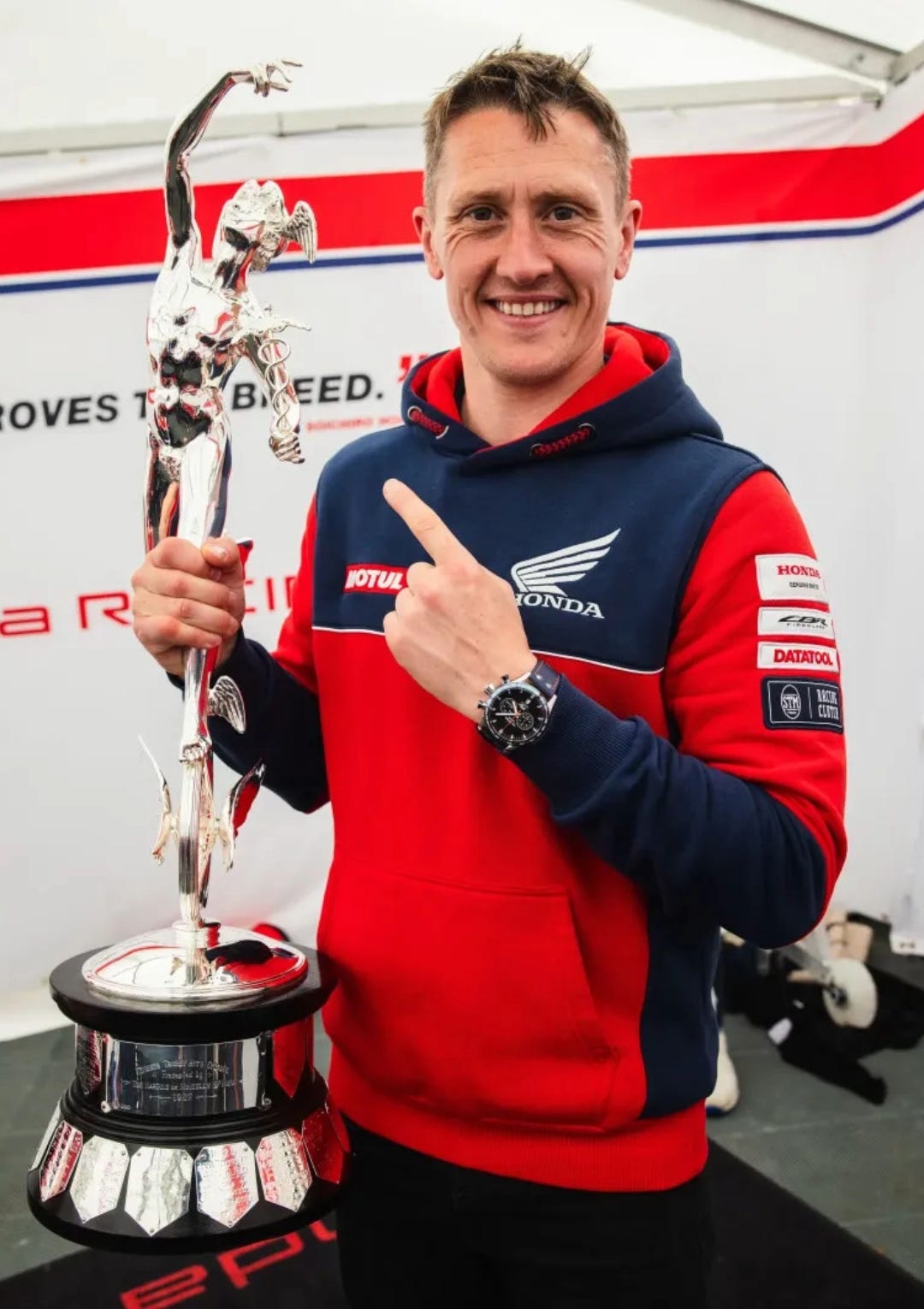
A text to Padgett. A deal struck in January 2025. A first TT that produced the Veron Cooper Trophy for Newcomer of the Year. The fifth fastest debutant ever. And then the return, in 2026, as a known quantity, a rider the paddock had stopped wondering about and started watching.
What the Mountain teaches you
There is a specific detail in Mitch Rees’ account of TT 2026 that tells you more than the results sheet ever could.
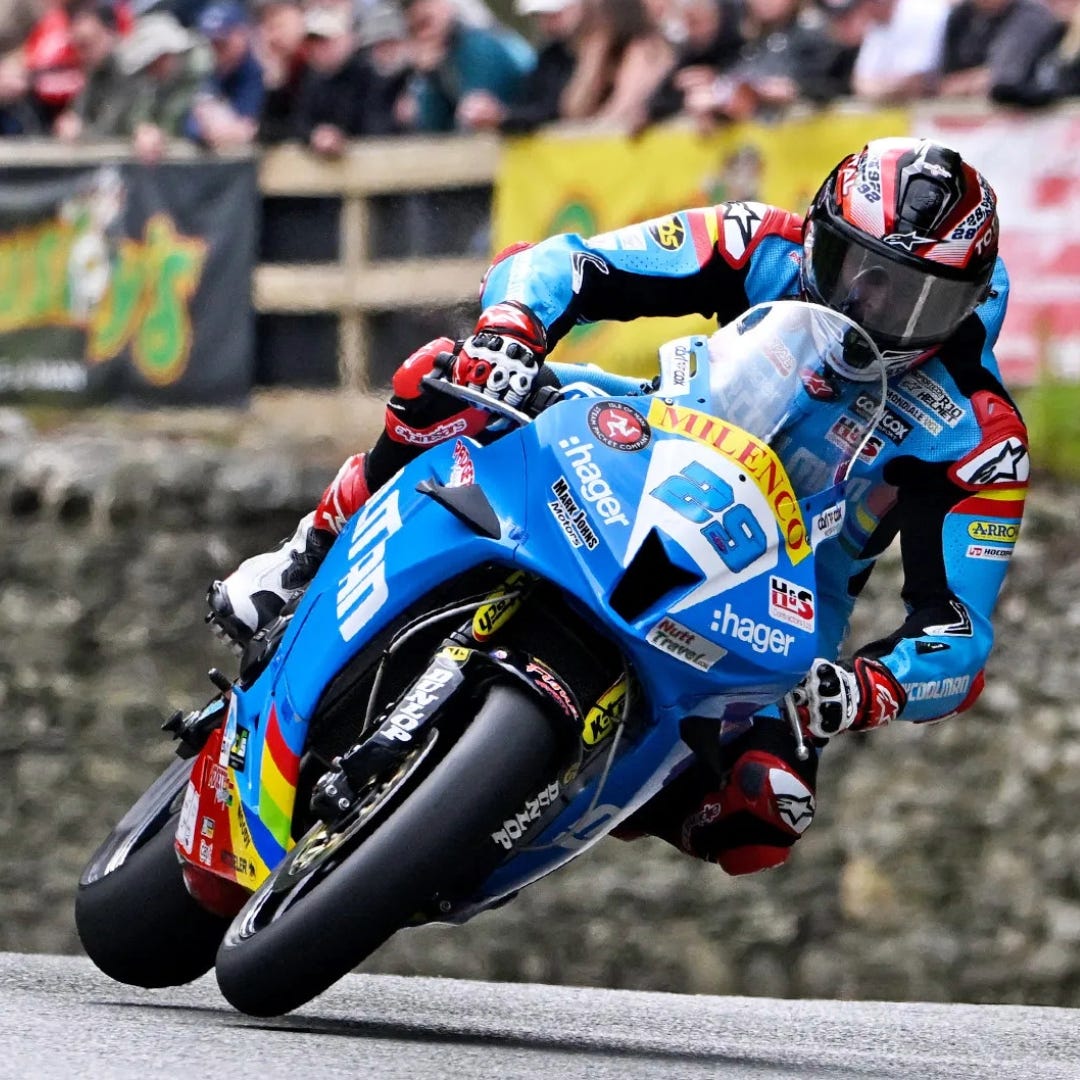
During practice, John McGuinness came up on him around the 13th milestone. Watched him through a left-hander on the approach to Kirkmichael. Then roared past. Afterwards, the Morcombe Missile delivered a single piece of advice that stayed with Rees the rest of the fortnight. It’s one little gem now embedded into the Bay of Plenty mechanic’s muscle memory.
“He said I went in really well but was sort of slow out. So I almost tried to do it the opposite way and went in there still, all right, but tried to get the better drive and focus on the exit rather than rushing in too much. And definitely felt like that helped for sure.”
This is what the TT does to a rider who is genuinely learning it. It’s never, according to the legends, rewarded aggression. It rewards precision, patience, and the ability to absorb information from people who have already paid for it in thousands of laps, some in ways you don’t want to think about.
Rees is absorbing it faster than almost anyone around him expected.
“Just each session, to be fair, just getting more and more confident,” he said. “It’s obviously been really nice having some dry track this year. Just been enjoying it, probably even more so this year …just really enjoying it, embracing it, and just taking it for the experience that it is.”
The results by the end of race week — 20th Superbike, 13th Supersport 1, 11th Supersport 2, consecutive personal bests, two silver replicas, his first full six-lap race completed — tell the story of a rider building a foundation, not chasing headlines. They came anyway.
Clive Padgett’s framework was always three years minimum. Rees is two in.
“It takes a minimum of three years,” Padgett said, citing 10-time TT winner Giacomo Agostini as perhaps the only exception in the modern era. “There’s no pressure from us. Lee will probably tell you we’re the most laid-back guys in the paddock, and that’s how it should be.”
The Senior TT that wasn’t
There is one thread in TT 2026 that sits unresolved.
The Senior TT, the showcase race, the one pretty much every rider comes to the Island for, was red-flagged on lap two. The result was later declared on lap one positions when the window to re-run it was slammed shut by weather. Dean Harrison, on outright lap record pace at the time, was declared the winner. Mitch Rees was 24th.
What the result doesn’t show is that Rees spent much of that first lap managing a bike that was cutting out intermittently — “once at the bottom of Bray Hill, just cut out for whatever reason…the ignition and everything was still on, it’s just like [the] fuelling cut and then it went in and then again after Ballagarey.”
He nursed it around the circuit, not knowing if it would happen again, riding in a state of managed uncertainty that would have unravelled a less composed person entirely.
“I rode most of the lap expecting maybe it was when the bike was G’ing out, maybe a loose wire or something like that. But it never did it again.”
Efforts to re-run the Senior were defeated by the Isle of Man’s weather. The race stands. Rees’ actual pace that day — 125.494mph on a bike playing up compared to his 127.082mph PB on the opening Superbike TT — remains the one unanswered question from 2026 that only 2027 can answer.
He is, characteristically, not dwelling on it.
“Hard to know where I was tracking, to be fair. It just wasn’t a great start to that one.”
But Johnston is dwelling on it. Pritchard is dwelling on it. Padgett, in his undemonstrative way, is thinking about it. Everyone in that paddock who watched Mitch Rees build through two weeks of racing in 2026 understands that the Senior TT has not yet seen what he can actually do.
The lineage


It would be easy to make the Bruce Anstey comparison only about temperament. Two laid-back Kiwis in a sport that rewards composure. But Johnston was pointing at something deeper.
Anstey came from New Zealand’s road racing culture, where circuits like the Cemetery Circuit in Whanganui and long since mothballed Paeroa forge a particular kind of racer. One who is comfortable with proximity, with consequence, with the discipline of racing on public roads where the margin for improvisation is almost zero.
That culture runs through Tony Rees. It runs through John Hepburn, who was anti-Mitch doing the TT until he understood that the reason his friend’s son wanted to race the Mountain Course was the same reason Hepburn himself had. And well too, winning six bronze replicas in 1999.
The TT is what road racers do when they’re ready. It runs through Bruce Anstey, who grew up in the same paddocks and became one of the most celebrated TT riders of his generation. Lauded by the likes of John McGuinness.
And it runs through Mitch Rees, who barely knew Anstey personally, though did meet him at the Northwest two years ago. “Dad raced against him, but I didn’t really know Bruce”.
They all carry the same wiring, a similar upbringing, the same instincts forged on the same roads.
“Through the guys at the Cemetery Circuit in New Zealand that have made it happen for these guys [like Todd, Hickman and Johnston] coming to New Zealand… which is then correlated back over here. So it’s worked out really nicely to have all that and, and just, I guess, some friendly shoulders [to lean on].”
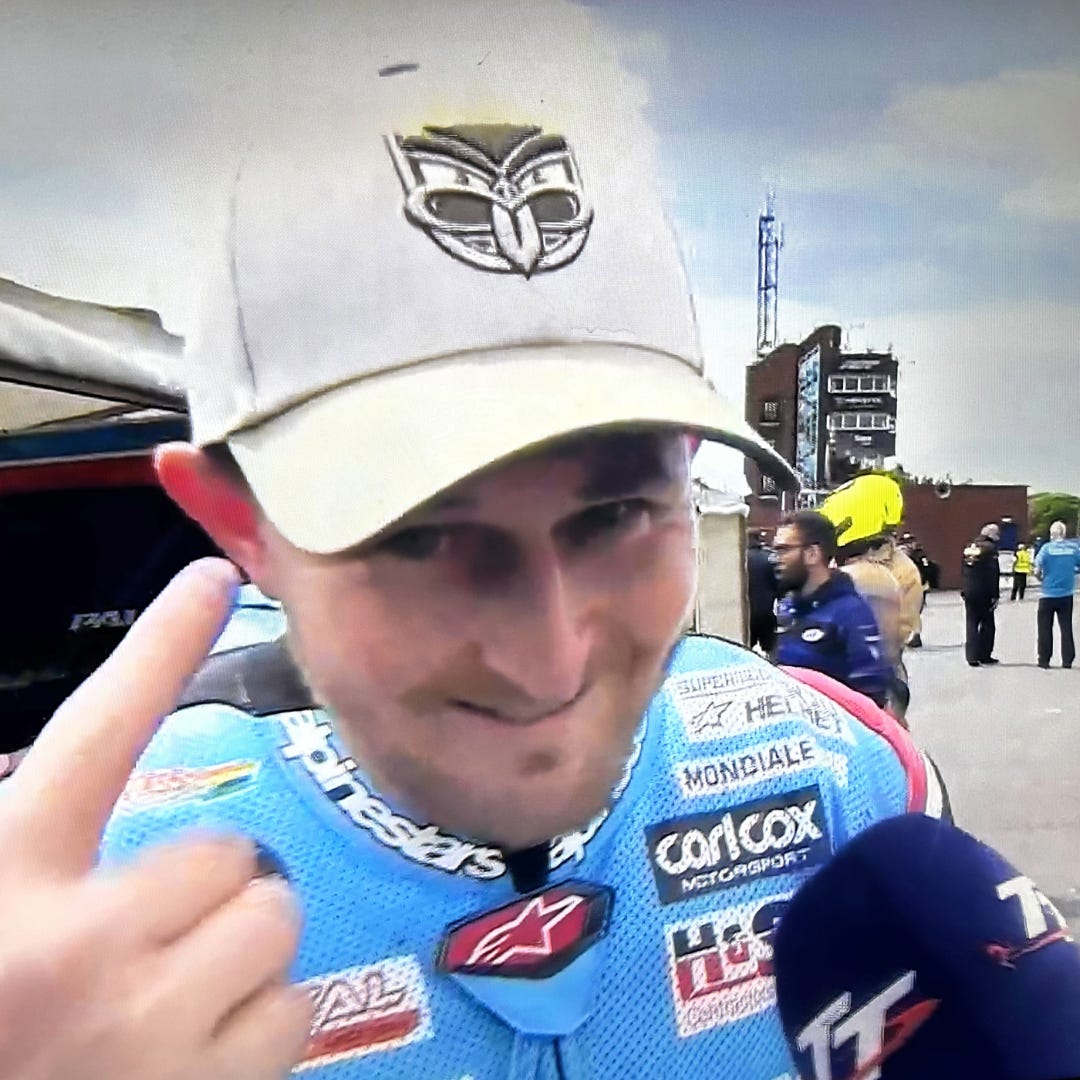
What comes next
Rees is confirmed for the 75th Cemetery Circuit races on Boxing Day. He’ll race Formula 1 and Formula 2, the spearhead of an extended Honda NZ Race Team that will campaign the Suzuki International Series. The Nelson Street Races on January 2 and the Burt Munro Challenge in Invercargill, where Mitch last year took the Star Insure NZ Hill Climb record from his father, are also on his radar.
NZSBK? “At this stage, no NZSBK is planned for myself at all. I just don’t know what the plan is for when I’ll be back over here [Europe], so I can’t commit to any of that.”
Which tells you that the plan being formed for 2027 has a European dimension. The Northwest 200 in May. A third TT in late May-early June. A third year that Padgett’s framework has always pointed toward.
There is no confirmed ride yet. “I haven’t got anything secured for 2027. I’ve spoken to people just in passing.”
The insurance costs are significant. The funding gap is real.
“Unfortunately don’t get any support from the TT or the Northwest, or Motorcycling New Zealand to come and do it. So we’ve got to find a whole bunch of money to do that.”
But Clive Padgett clearly loves what he has in Mitch Rees, and the TT now lives in Rees’ blood the way it lives in the blood of almost every rider who has ever turned the first corner at Bray Hill and felt the Mountain Course reach up and claim them.
“I really hadn’t done a lot of homework prior to that,” he said of the decision to come in 2025 after the text exchange with Padgett. “Once it was like right, it’s happening…I locked in big time.”
He will lock in again. The only question is the machinery and the budget, and those are problems that have a habit of solving themselves when enough people in a paddock have watched someone put the fastest road racers in the world away on New Zealand circuits and then come to the Isle of Man and go faster every time they ride.
When, not if
Chris Pritchard said it on the podcast. “It’s a matter of when, not if, I think with this guy.”
Rees, characteristically, deflected. Johnston, characteristically, doubled down.
What neither of them said — what the results and the trajectory and the testimony of Padgett and McGuinness and Todd and Hickman all quietly insist — is that the when is not far away.
The Mountain Course takes three years to learn, Padgett says. Year one, Mitch Rees won the Newcomers Award. Year two, he posted consecutive personal bests, took two silver replicas, completed his first full six-lapper, and handed a compromised Senior TT back to the weather without complaint.
Year three is 2027. And the people inside the ropes, the ones who matter, as Johnston put it, are already leaning forward.